




Basic introduction
SQL Server is a relational database management system launched by Microsoft. It has the advantages of ease of use, good scalability and a high degree of integration with related software, and can be used across a variety of platforms ranging from laptops running Microsoft Windows 98 to large multi-processor servers running Microsoft Windows 2012.
Microsoft SQL Server is a comprehensive database platform that provides enterprise-class data management using integrated business intelligence (BI) tools. The Microsoft SQL Server database engine provides more secure and reliable storage capabilities for relational and structured data, allowing you to build and manage highly available and performant data applications for your business.
Performance parameters
Mechanism structure
SQL Server is a client/server system
structure
From an architectural perspective, the SQL Server relational server component itself doesn't really care where the client program is running.
interface
SQL Server has two interfaces that can be considered native to SQL Server 7.0, OLE-DB and ODBC. The DB-Library interface is also native and communicates with TDS, but DB-Library uses an older version of TDS and requires some conversion on the server.
server
As mentioned earlier, the primary method for clients to communicate with SQL Server is through the use of TDS messages. TDS is a simple protocol. When SQL Server receives a message, it is considered that an event has occurred.
How to use
If a blank page appears, as shown below;
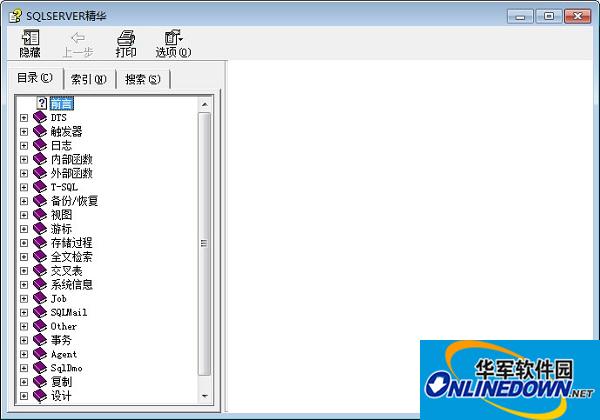
Just right-click the file and click Properties, as shown below;
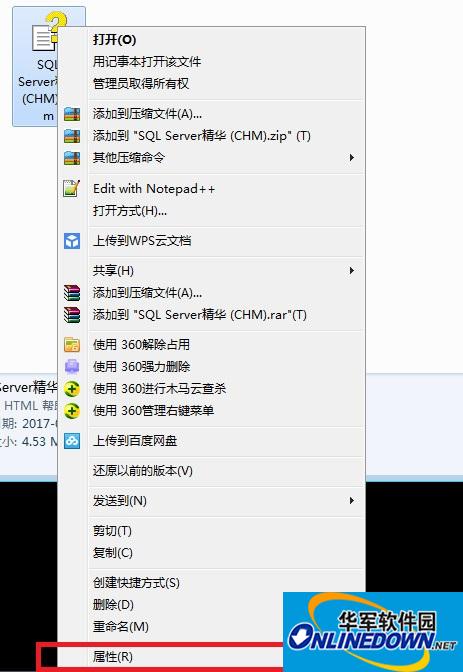
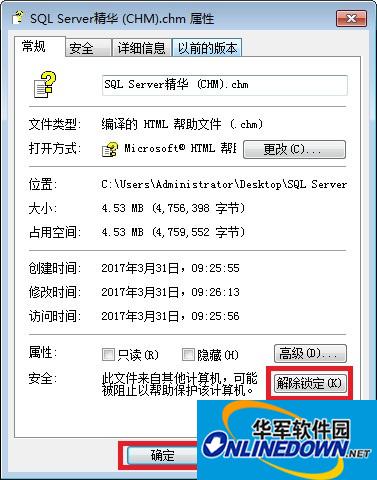
Click to unlock it, as shown below.




Useful
Useful
Useful