
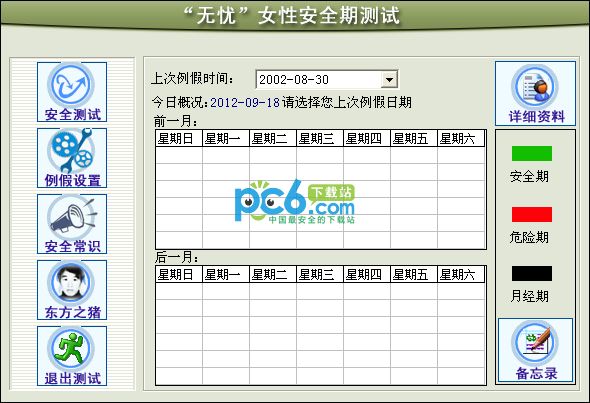



It can be seen that the "Worry-free" female safe period testing software is a rare and good tool, and its interface is beautiful and generous, displayed in the form of a calendar, so it is particularly vivid and vivid, and there are many practical and practical functions that can definitely meet your changing needs, so it is better than similar software!
- Green versionView
- Green versionView
- Green versionView
Safe period contraception
Normal women of childbearing age have menstruation once a month. The period from the beginning of this menstrual period to the first day of the next menstrual period is called a menstrual cycle. For example, from the perspective of contraception, each menstrual cycle of a woman can be divided into menstrual period, ovulation period and safe period. Safe period contraception is a contraceptive method that stops sexual life during the ovulation period. This is a traditional contraceptive method. Before the advent of birth control pills and intrauterine devices, it was one of the commonly used contraceptive methods at home and abroad.
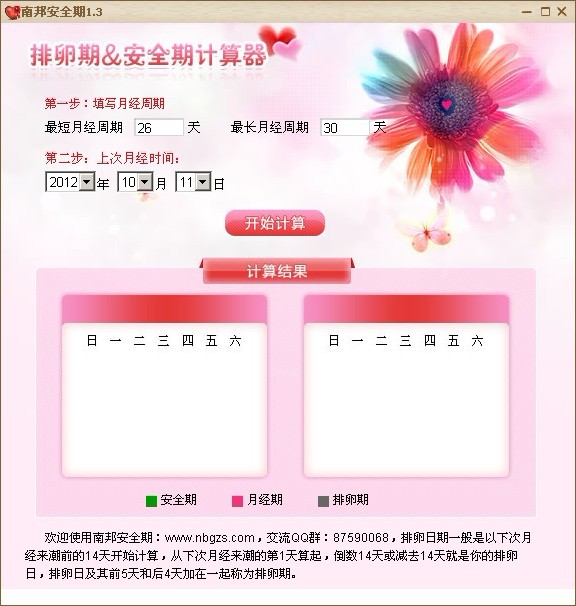
A woman's ovulation date is generally about 14 days before her next menstrual period. After the egg is discharged from the ovary, it can survive in the fallopian tube for 1-2 days, waiting for fertilization; a man's sperm can maintain fertilization ability in a woman's reproductive tract for 2-3 days, so it is easier to get pregnant during sexual intercourse in the days before and after the egg is discharged. For the sake of safety, we call the 5 days before and 4 days after the ovulation day, including the ovulation day, a total of 10 days as the ovulation period. Because it is easy to get pregnant during sexual intercourse during the ovulation period, the ovulation period is also called the fertile period or the dangerous period.
The safety period is divided into a safety period before ovulation and a safety period after ovulation. The period from the day of menstruation to the day before ovulation begins is the period before ovulation. From the first day after ovulation to the day before the next menstrual cramps is the safety period after ovulation. The safety period after ovulation is safer than the safety period before ovulation. This is because some women sometimes ovulate early due to environmental changes and mood swings, which shortens the safe period before ovulation without them knowing it, making the safe period before ovulation less safe. The chance of the ovary ovulating twice in one menstrual cycle is very rare. That is, the second time of ovulation usually does not occur between ovulation and the next menstrual period. Therefore, the safety period after ovulation is relatively safe.
The key to using safe period contraception is to determine the woman's ovulation date. When the ovary ovulates, there is generally no special feeling. Even though some women may have symptoms such as lower abdominal pain, backache, breast swelling, and mood changes, these phenomena are not specific symptoms of ovulation and cannot be used as a basis for ovulation. Menstruation and ovulation change cyclically, and there is a close relationship between the two. If you master the change patterns of the two, you can determine the ovulation date through indirect methods. There are many methods to determine the date of ovulation, and the methods that women can master by themselves include: calculating based on the menstrual cycle, measuring basal body temperature, and observing cervical mucus secretion.









Useful
Useful
Useful